Valor Mortis Review & Ratings: A Plague-Warped Napoleonic Soulslike
Valor Mortis arrives as a first-person Soulslike from One More Level, the studio behind Ghostrunner, published by Lyrical Games. It launches October 13, 2026 on PlayStation 5, Xbox Series X|S and PC via Steam, arriving day one on Xbox Game Pass. Because the game is still pre-release, the impressions below are drawn from the playable demo (Chapters I: Revival and VII: Witch Hunt) rather than a finished retail build — so treat this as a hands-on assessment of the systems, not a final scored verdict. Where numbers are unconfirmed, we say so.
What Kind of Game Is Valor Mortis?
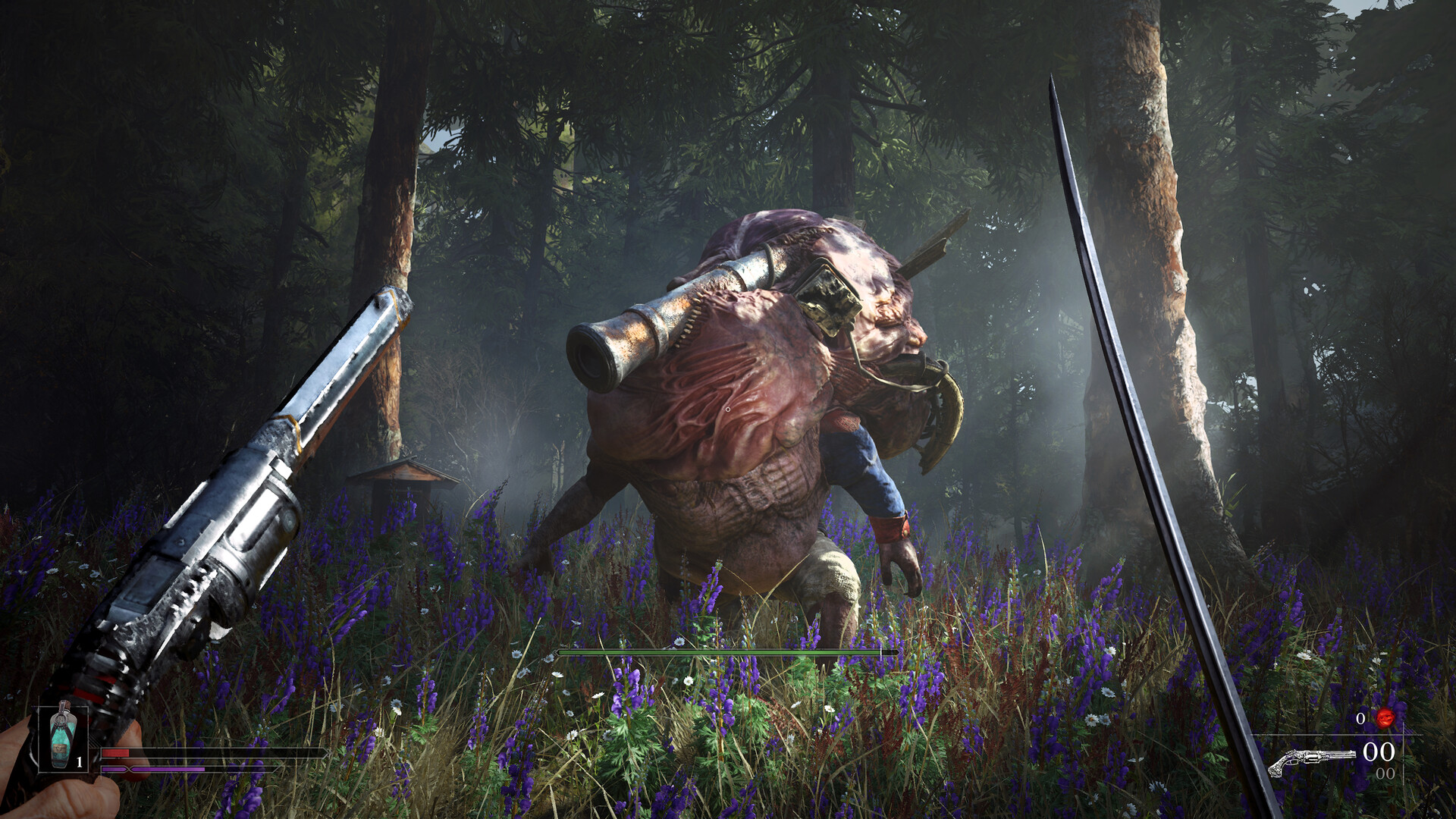
It is a genuine Souls-like, not a Souls-lite. The demo ships without a difficulty slider and hands players two of its toughest chapters up front, building combat around reading enemy wind-ups rather than out-damaging them. The twist is the camera: this is a first-person experience, so spacing, Posture and parry timing all play out through a tight, immersive viewpoint rather than a third-person lock.
The setting is an alternate, supernatural reimagining of 19th-century Europe. You play William Dowsett, a resurrected soldier of Napoleon’s Grande Armée who rises from a battlefield grave, his veins coursing with the corrupting power of the Crimson Plague. That plague is both your curse and your toolkit, and Napoleon’s disembodied voice — portrayed by Vincent Cassel — speaks inside William’s mind as you traverse the ravaged continent.
Combat: Parry, Posture, and Punishment
The core loop is deliberate and punishing. Trading blows loses fights; parrying the boss’s strings fills its Posture meter, and a broken Posture opens the door to a Critical Attack for huge damage. A stamina-gated dash keeps you mobile without letting you simply roll through every threat, and shattering enemy Weak Points feeds your blood-magic resource, Nephtoglobin.
That extraction loop matters. Melee hits and shattered Weak Points build Nephtoglobin, which you then cash into a Fire, Stasis or Shield Transmutation at the right moment. Fire Transmutation melts organic barriers and burns enemies like Carrion, while Stasis buys space and thins enemy packs — both are blood-magic abilities tied directly to William’s resurrection.

Weapons and Dual-Wielding
The demo’s arsenal is Napoleonic-era through and through. Rapiers and sabres carry the melee side, while a single-shot pistol fuses into the flow of combat and can also trigger environmental weak points. A musket debuts in the Lighthouse level. Crucially, you can dual-wield — weaving melee and firearms together while layering in supernatural powers, which is where the combat system finds its identity.
Traversal Is a Weapon
Mobility is not just navigation here; it is a combat answer. A grapple hook (a clear nod to the developer’s Ghostrunner roots) and wall-running let William flank enemies from above and reposition out of danger. The Eternal Guard faction is best read as a mobility problem — the intended counter is movement and improved targeting, not standing your ground.
The Demo’s Two Bosses
The demo presents two named bosses, and they define its difficulty curve.
General Lothaire, the Eagle-Bearer is a two-phase commander who fights alongside the spawn of his rage. Managing the adds while keeping Target Lock on the General is the fight’s real challenge, and Stasis is your emergency valve when you get swarmed.
High Justicar Aurelius, Last of the Faithful is a master fencer and effectively the demo’s parry check. You beat him by baiting his strings, parrying to break Posture and punishing with Criticals — patience over aggression. If you are mashing attacks, this is the wall where it stops working.
Field Threats Between the Bosses
William’s own journal spells out the intended counter for each enemy, and fighting them the “wrong” way is where most unfair-feeling deaths come from:
- Carrion is immune to blades — burn it with Fire Transmutation to destroy the mass holding it together.
- Eternal Guardsman is an elite fencer; parry its strikes, break its Posture, then punish.
- Howler hunts in packs; use openings or Stasis to thin the group before you get surrounded.
- Risen Grenadier lobs grenades from range; close the distance while dodging the throws.
- Risen Musketeer has a slow reload — that window is when you close in.
- Risen Sapeur swings barricade-breaking blows that beat your guard, so dodge rather than block.
- Volunteer Brute is a greatsword threat; duck its wide swings and strike in the gaps.
Progression, Lanterns, and Builds
Progression borrows the bonfire formula. Lanterns are checkpoints that become restart points when lit, let you spend Catalyst, and reset regular enemies when you rest or die — so banking Catalyst before a dangerous path is a survival habit worth forming. Ambers are socketable survival items, and the life-steal and regeneration variants are the ones that turn a brutal fight into a winnable one.
Builds currently span Saber/Sabre, Claymore, Musket and the Fire/Stasis Transmutations, supported by a stat tree. The demo-safe priority is Maximum Health and Melee Damage first. Because much of this content is pre-release, exact numbers are unconfirmed — verify in-game before committing resources.
Presentation and Audiovisual Quality
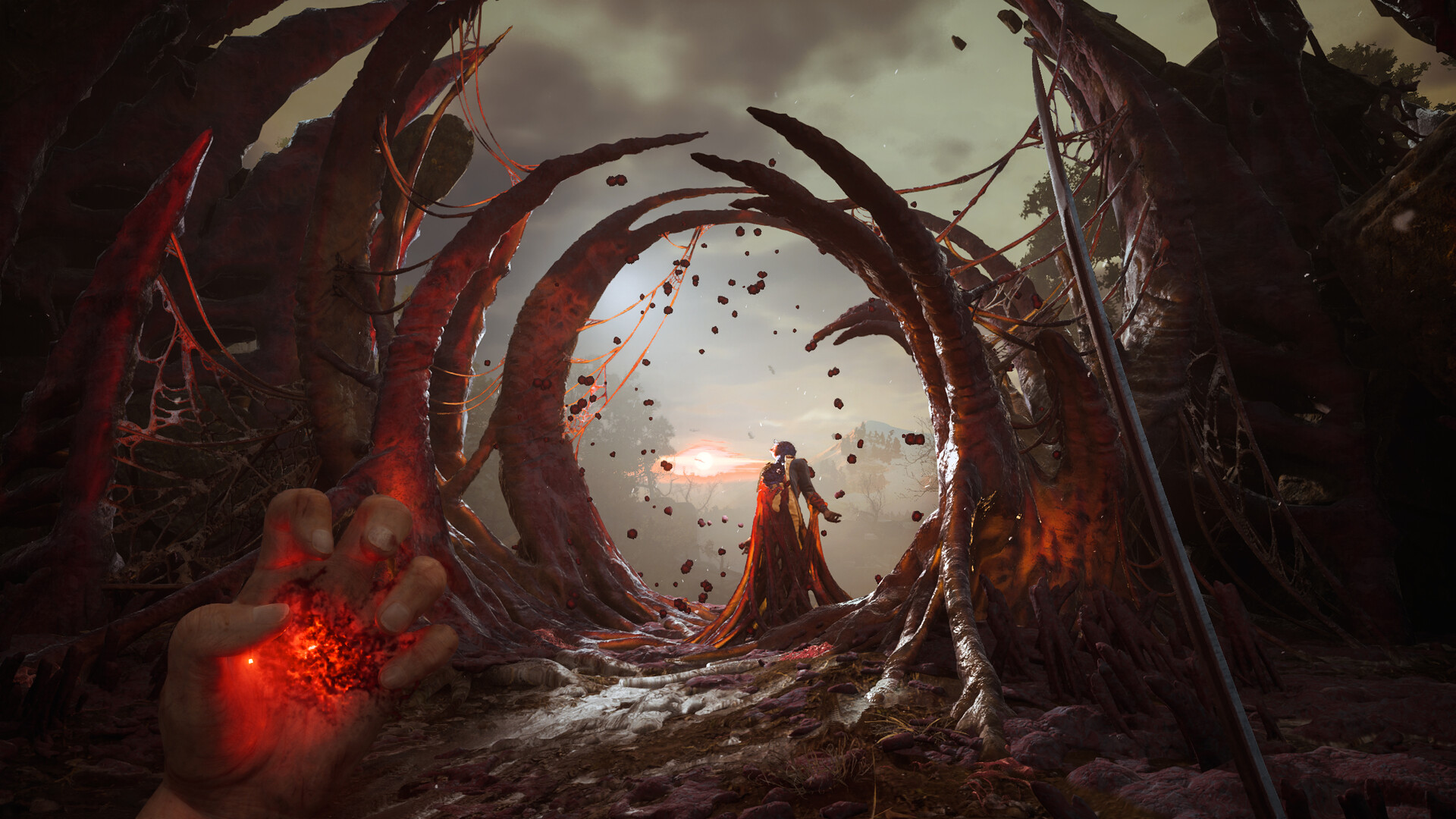
One More Level is pushing AAA production values. The aesthetic leans on theatrical lighting and mature, grim themes, and the original score is co-composed by Arkadiusz Reikowski — whose credits include the Silent Hill 2 Remake, The Medium and Layers of Fear 1 and 2 — alongside in-house composer Oskar Bała. The game runs on Unreal Engine 5.
Controls and Accessibility
The demo is unusually flexible for a Soulslike. Lock-on exists (“Target Lock On/Off”) with a Switch Target control, and every action accepts a primary and secondary key with a Reset to Defaults option. Controller players get five preset schemes — Default, Classic, Dodge/Block Swap, Bumper Jumper and Bumper Jumper 2 — plus themed icons for Xbox Series, PlayStation 5 or Nintendo, including DualSense and Joy-Con/Pro Controller. The crosshair and entire HUD can be toggled off, and Crouch can be set to Hold, Toggle or Press.
Four settings noticeably flatten the difficulty curve without an easy mode: Target Lock, Combat Assist, Instant Restart and Quick Cast. Turning these on before a boss fight is the single most effective quality-of-life move in the demo. Save Anytime also lets you save and resume freely, which softens the Soulslike runback loop considerably.
Known Issues and Technical State
The demo has real, documented problems, and the developer’s pinned threads acknowledge them. The fastest safe order is: update the demo, update your GPU driver, restart the game, and avoid FSR on an affected Nvidia GPU. A few of the headline issues:
- Nvidia crash during level loading with FSR selected — a known issue; the official workaround is to use TSR or DLSS until it is resolved.
- D3D12/D2DX12 crash or wrong-GPU launch — confirm the game runs on the discrete GPU; disabling Intel AI Boost is suggested as a last resort.
- AMD crash referencing amdxc64.dll — perform a clean driver reinstall.
- DLSS freezes while loading — still listed in the pinned Known Issues thread even though version 1.02 restored DLSS support; switch to TSR, restart and report if it happens.
- Black or endless loading screen — acknowledged but with no dedicated fix; restart, update and retry with TSR.
Versions 1.01–1.03 fixed crashes, stuck states, progression limits and a Witch Hunt loading crash, so keeping the demo current is essential. Change one setting at a time and keep a record of the upscaler, Frame Generation, HDR and display mode that triggered any problem.
Who Should Play It — and Who Should Wait
If you want a demanding first-person Soulslike with a distinctive historical-horror identity, high-mobility combat and a genuinely fresh dual-wielding loop, Valor Mortis is worth your attention. The parry-and-Posture combat, the grapple-and-wall-run traversal and the plague-warped Napoleonic setting combine into something that does not feel like a clone.
If you want polish out of the gate or you are sensitive to early technical rough edges, the smart move is to wait for post-launch patches. The demo’s crash and loading issues are real, and its systems are still evolving ahead of the October 13, 2026 release.
Verdict
On the strength of its demo, Valor Mortis reads as a confident, atmospheric Soulslike that understands its genre while carving out a first-person niche. Combat is learnable rather than arbitrary, traversal is meaningfully woven into fighting, and the presentation carries real weight. The open questions — final balance, technical stability and the depth of the full build — are exactly the things that decide a score at launch. For now, this is a promising, system-rich debut that rewards patience the same way its boss fights do.