Valor Mortis at a Glance
Valor Mortis is a first-person action Soulslike developed by One More Level — the studio behind Ghostrunner — and published by Lyrical Games. Set in an alternate, supernatural reimagining of 19th-century Europe, it follows William Dowsett, a resurrected soldier of Napoleon’s Grande Armée who rises from a battlefield grave into a continent ravaged by the Crimson Plague. Built in Unreal Engine 5, the game pairs deliberate, stamina-driven melee combat with high-mobility traversal and blood-magic powers.
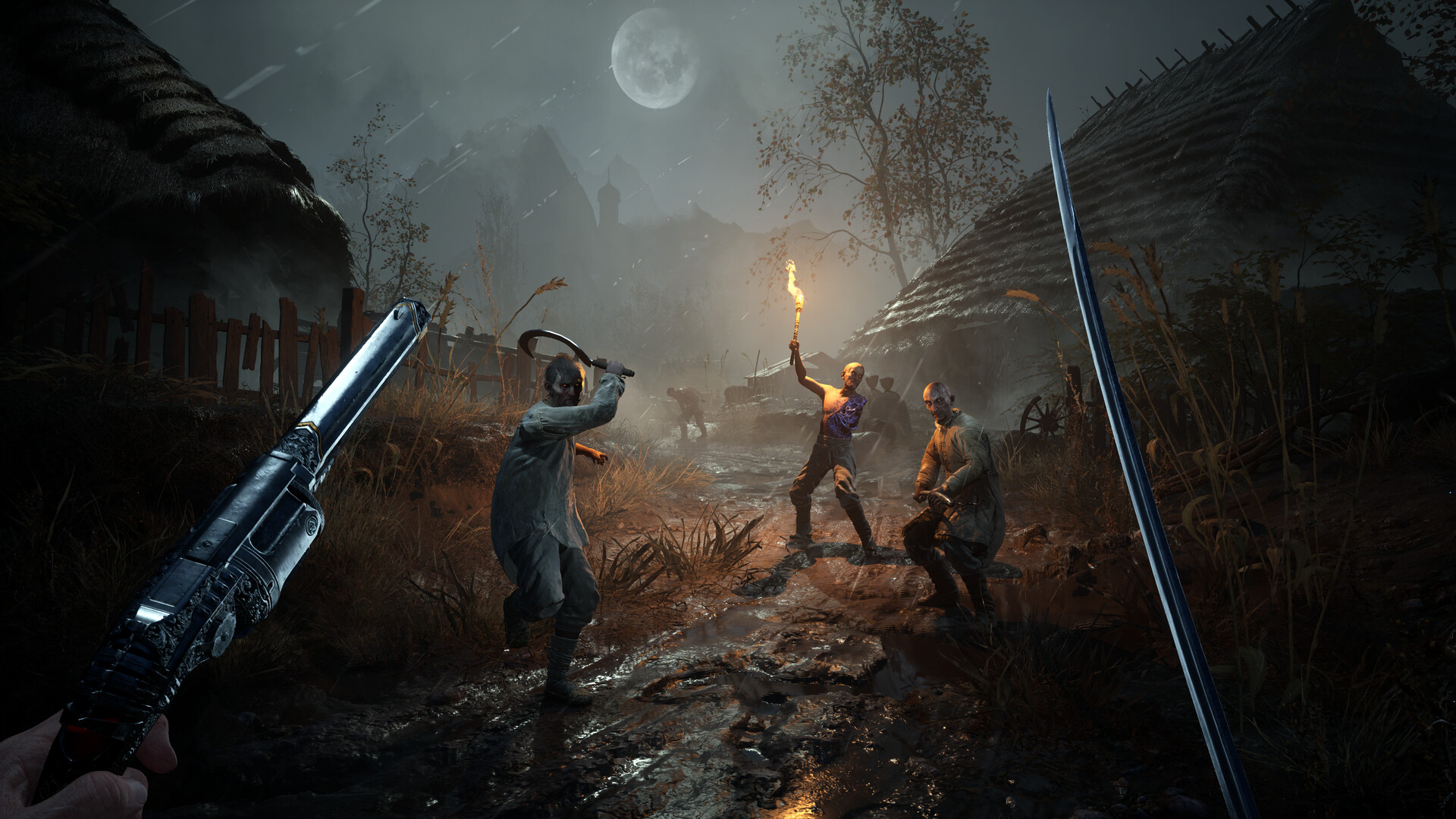
This overview gathers everything confirmed about the game in one place: its release window, platforms, subscription status, combat systems, characters, and the demo that is already playable.
Release Date, Platforms & Game Pass
Valor Mortis is scheduled to launch on October 13, 2026, arriving simultaneously on PlayStation 5, Xbox Series X|S, and PC via Steam.
The headline news for many players is its subscription status: Valor Mortis is coming to Xbox Game Pass on day one. That means Game Pass subscribers can play the full game at launch without a separate purchase — the same day-and-date model used for other first-party and partner titles. If you are weighing whether to buy or subscribe, the Game Pass launch makes the subscription route the cheapest way in on Xbox and PC.
Is Valor Mortis an Indie Game?
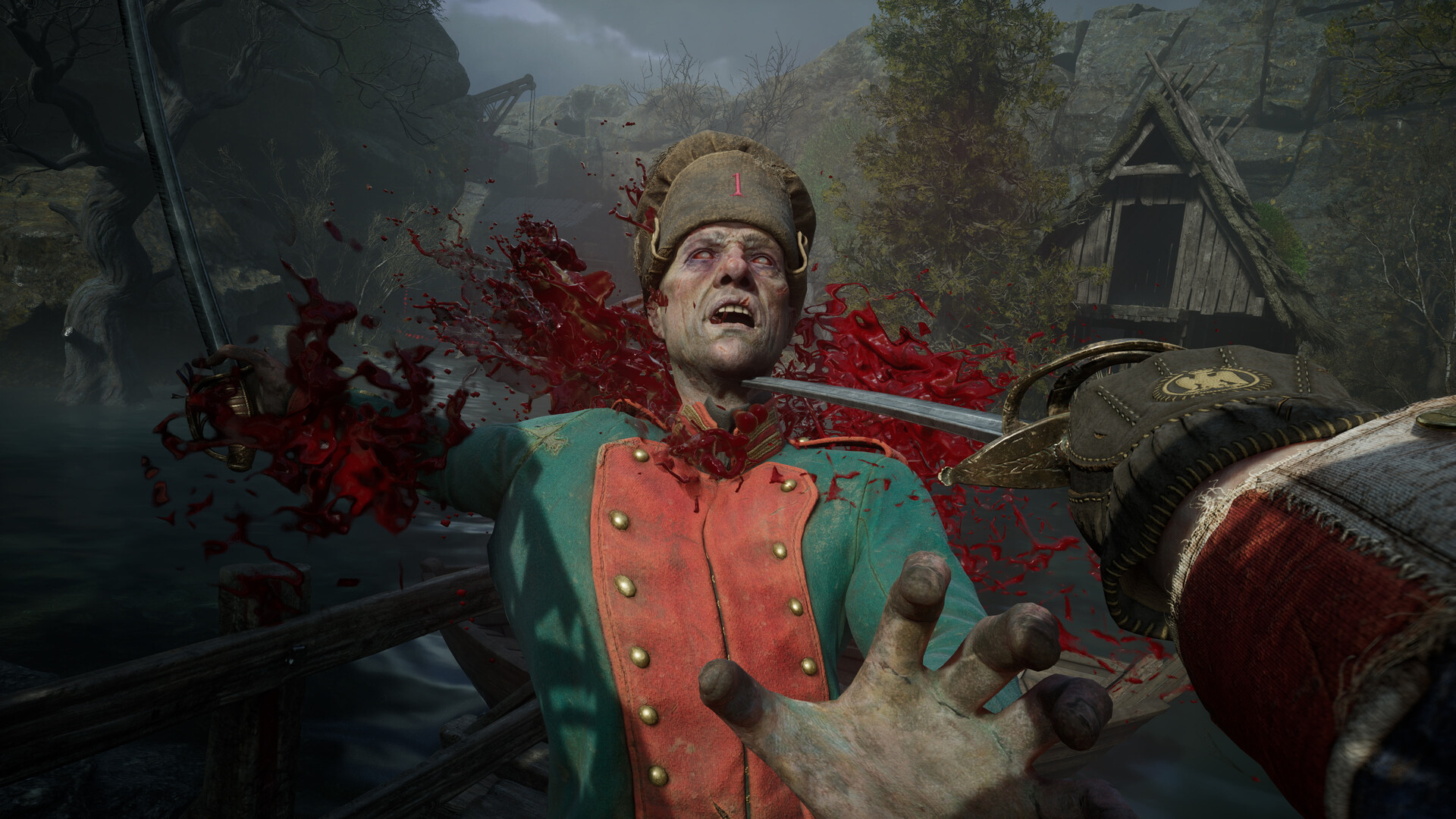
Valor Mortis is developed by One More Level, an independent studio best known for Ghostrunner, and published by Lyrical Games. That makes it an indie-developed video game in the sense that it comes from a self-driven, independent team rather than a giant in-house publisher studio — but it is produced to a high, AAA-adjacent standard. The developer explicitly markets AAA audiovisual quality, an original score co-composed by Arkadiusz Reikowski (Silent Hill 2 Remake, The Medium, Layers of Fear 1 and 2) alongside in-house composer Oskar Bała, and a theatrical, grim art direction. In short: an indie pedigree with big-budget production values.
The Story & Setting
The game takes place in a plague-warped alternate history. Napoleon’s conquest has unleashed something far more horrifying than war. A continent-wide plague — the Crimson Plague — twists the dead into walking horrors and floods the streets of Napoleon-era Paris with monsters.
You play as William Dowsett, a young and bold Englishman, disillusioned with the monarchy, who volunteered to fight for Napoleon inspired by the ideal of a unified Europe. The story begins with William waking on a grim battlefield, resurrected, with the corrupting power of the plague flowing through his veins. That connection grants him supernatural abilities, and it also explains why he can hear Napoleon as a disembodied voice inside his own mind — speaking as a father would to a son. As William traverses the ravaged battlefields and occupied territories, he uncovers a conspiracy that threatens all of humanity.
Key Characters
Beyond William and Napoleon, the cast shapes the journey:
- William Dowsett — the resurrected protagonist of the Grande Armée, whose nephtoglobin connection fuels his traversal abilities and blood-magic.
- Emperor Napoleon Bonaparte — at the head of the largest army known to Europe; his victory at Waterloo opened the way east, and he speaks directly into William’s mind. He is portrayed by Vincent Cassel.
- The Shrike — a rebel fighter who moves through occupied Eastern Europe with strength no ordinary soldier possesses. She answers to no authority and fights for the people living under the Empire’s occupation.
- James Stewart — a blacksmith’s son from the Scottish Highlands who volunteered for Napoleon, convinced his service would win Scotland its freedom. He is William’s closest friend in the Legion.
- Lucjan Skawinski — a Polish craftsman and veteran of multiple wars who now travels the ruined countryside searching out safe havens for weary travelers, marking each with a hand-drawn sign.
Combat, Weapons & Supernatural Powers
Combat is designed to feel threatening and immersive. It is stamina- and skill-based: every death is framed as a stepping stone to mastery as you learn to parry blows, dash out of harm’s way, and pressure enemy weak points before finishing them off.
William dual-wields Napoleonic-era weaponry — rapiers, sabres, pistols, and muskets — and weaves those into the melee flow alongside supernatural abilities:
- Rapier — a primary thrusting blade built for speed and precision.
- Pistol — a single-shot firearm fused into the melee flow, also usable to trigger environmental weak points.
- Musket — a firearm that debuts in the demo’s Lighthouse level.
- Sabre — a blade secured at the start of Chapter I: Revival.
- Greatsword — a heavy weapon wielded by the Volunteer Brute and the Eternal Guard.
The supernatural side is driven by blood-magic Transmutations fueled by Nephtoglobin, a plague substance tied to William’s resurrection. Channeling power correctly strengthens your attacks and unlocks new supernatural skills. Confirmed Transmutations include Fire (which removes organic barriers and burns enemies like Carrion), Stasis (used to buy space and thin enemy packs), and Shield (named for the demo’s Lighthouse level).

Progression: Lanterns, Catalysts & Ambers
Progression follows a Soulslike loop with its own vocabulary:
- Lanterns act as checkpoints. They become restart points when lit and allow you to spend Catalyst. Resting or dying resets regular enemies.
- Catalyst is an upgrade resource spent at Lanterns — bank it before heading down a dangerous path.
- Ambers are survival items, including life-steal and regeneration variants, that turn a brutal fight into a survivable one.
- A stat tree lets you invest in stats such as Maximum Health and Melee Damage.
For planning, the community maintains a Build Planner (to map a stat spread) and a Catalyst Calculator (to check upgrade costs).
Exploration & Traversal
Valor Mortis borrows a Metroidvania-style structure. William’s newfound mobility lets him outrun and flank Napoleon’s plague-ridden Eternal Guard, progress carefully, uncover environmental secrets, and survive the rotting remnants of an endless war. The traversal toolkit includes:
- Grapple Hook — nods to the developer’s Ghostrunner roots, letting William flank enemies from above and cross treacherous terrain.
- Wall-Running — high-mobility movement used to flank enemies and navigate the environment.
Bosses & Enemies
The demo features two named bosses and a roster of field threats, each with a specific counter drawn from William’s in-game journal:
- General Lothaire, the Eagle-Bearer — a two-phase boss at the end of Chapter I: Revival, a relentless commander who fights alongside the spawn of his rage. Manage the adds, keep target lock on the General, and use Stasis when swarmed.
- High Justicar Aurelius, Last of the Faithful — a master fencer and the demo’s parry check. Bait his strings, parry to break Posture, and punish with Criticals. Patience over aggression.
Field threats include Carrion (immune to blades — burn the mass holding it together), Eternal Guardsman (elite fencer; parry and break Posture), Howler (hunts in packs; thin them with Stasis), Lancer, Risen Grenadier (close the gap while dodging grenades), Risen Musketeer (punish the slow reload), Risen Sapeur (dodge the barricade-breaking blows rather than blocking), Risen Soldier (parry basics and counter), Shambling Villager (weak alone, dangerous in numbers), Smallsword, and Volunteer Brute (duck its wide swings and strike in the gaps). Elite loyalists known as The Relentless are identified by greatswords and concealed faces.
The Demo: What’s Playable Now
A playable demo is available and includes two chapters, which is unusual — it deliberately hands players some of the game’s hardest content with no easy mode.
- Chapter I: Revival — a mostly linear battlefield tutorial that ends with General Lothaire.
- Chapter VII: Witch Hunt — a later-game slice built around the rapier, musket, Shield Transmutation, and traversal. The Lighthouse is the demo’s second level, a traversal showcase reached across a destroyed bridge using transmutation powers.
Comfort features include Save Anytime, letting you save at any moment and resume freely.
Controls & Accessibility
The demo exposes a deep control layer. There is lock-on (“Target Lock On/Off” with a Switch Target control), full rebinding with primary and secondary keys, and a Reset to Defaults option. The crosshair and the entire HUD can be toggled off.
Five controller preset schemes are available: Default, Classic (a more traditional Souls-style mapping), Dodge/Block Swap, Bumper Jumper, and Bumper Jumper 2. Controller icons can be themed for Xbox Series, PlayStation 5, or Nintendo (including DualSense and Joy-Con / Pro Controller).
Separate aiming sensitivity modifiers matter for firearm and Transmutation play — set them lower than your hipfire sensitivity for steadier shots and Stasis throws. Other feel options include Combat Assist (camera snap toward your target), Grappling Assist, Quick Cast (skips the confirm step), and Instant Restart (restart from the last checkpoint without the death screen — a big one for boss runbacks).
Known Issues & Fixes
If you hit trouble in the demo, the fastest safe order is: update the demo, update your GPU driver, restart the game, and avoid FSR on an affected Nvidia GPU. If loading still fails, verify the game is using the discrete GPU; for a missing interface, toggle HDR off and on. Documented issues include:
- Nvidia GPU crash with FSR selected — use TSR or DLSS instead.
- D3D12 / D2D12 crash or wrong-GPU launch — make sure the game runs on the main/discrete GPU rather than integrated graphics.
- AMD crash mentioning amdxc64.dll — perform a clean driver reinstall.
- DLSS freezes while loading — status remains listed despite 1.02 restoring DLSS support; switch to TSR, restart, and report it.
- Black or endless loading screen — a rare acknowledged lock; fully restart, update the demo and driver, disable the upscaler/Frame Generation combination that preceded it, and retry with TSR.
Also note that after changing Frame Generation you must restart the game due to an Unreal Engine limitation, and it is best to change one setting at a time while keeping a record of what you changed.
What to Expect at Launch
Valor Mortis arrives on October 13, 2026 for PS5, Xbox Series X|S, and PC (Steam), launching day one on Xbox Game Pass. Between its Ghostrunner lineage, its Unreal Engine 5 presentation, and its first-person take on the Soulslike loop, it is one of the more distinctive indie-developed video games on the horizon — a Napoleonic nightmare of parries, blood-magic, and grappling-hook traversal.